Lesson 8 – June 10th

June 10th Aim: To read Tables and graphs

Task Title. Reading a Table

Terms

  1. Vacation – holidays from work (for example Monday to Friday; To travel away from home
  2. Holidays – include days off for everyone (For example Public Holidays) / days off school, work, club/circle or other events

  1. The title of this Table is “Vacation Days per Year” per=every
  2. Short Description: reading left to right; 1) The left side has 8 countries, 2) From there there is information in order starting with Average =====employees give, next Average =====employee takes, and finally 3) Not used days.
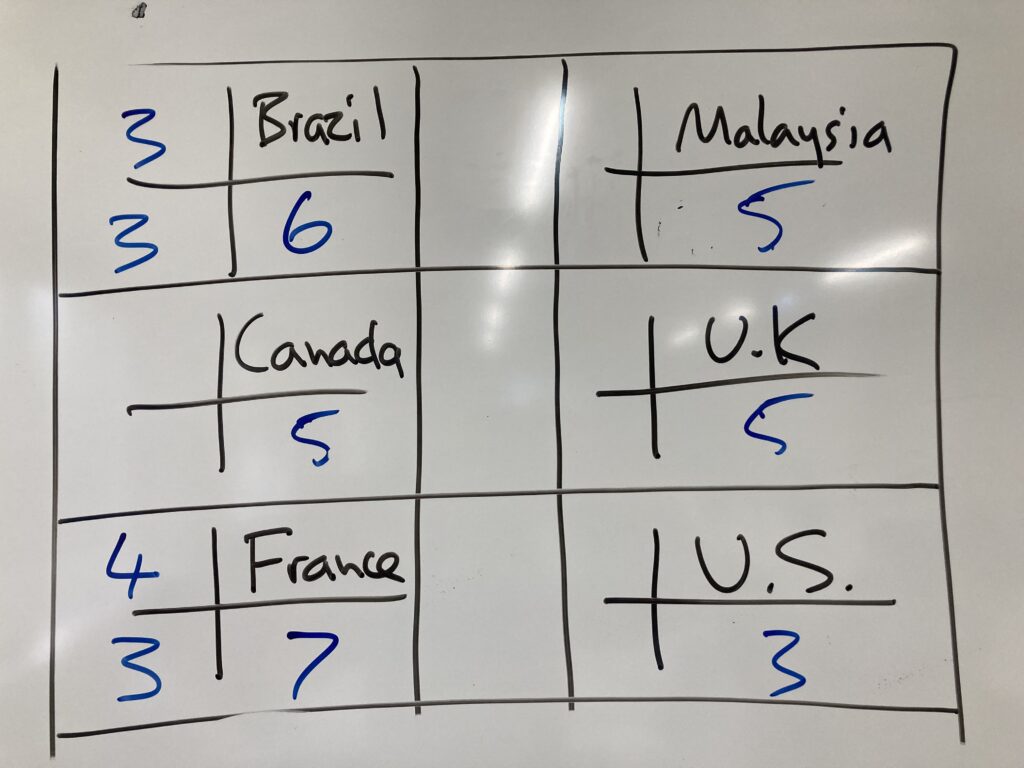
  3. Detail (Line 1): In Brazil they have an average of 30days vacation (1), they take an average of 30 days (2), and there are no days left (3).
  4. Line (2-8): … write the details for every country.
  5. Results (the groups and details) (Task 4)

Task 1 Title: Writing Details

  • In your groups: write the details of a country
  • Check with your country

Task activity: select countries and write the sentences

Task 2 Title: Evaluation: groups / grouping method

  • Step 1: decide the result – what is the result?
  • Step 2: what groups can you see – think about it?
  • Step 3: make the groups [***Hint – there are three groups of countries]

Writing challenge: write a grouping report about these 3 groups.

Teacher example:

  • In group 1 / For group 1 : there are no days vacation left. These countries include Brazil, Canada and France.
  • In group 2 / For group 2 : there are a few days vacation left. There are four countries and they are Malaysia, Mexico, UK and the US. The days left are between 1 to 4 days.
  • In group 3 / For group 3 : there are a lot of days vacation left. There is only one country Japan [ and they only take half the numbers of days vacation / and take 10 days only vacation ]

Task 6 Title: side A Vacation or Holiday;

  • telling a story to a foreigner
  • say (express) your feelings about it
  • recommend something

HOMEWORK

  • Saturday Quiz

Lesson 7 – June 9

Lesson 6 HOMEWORK

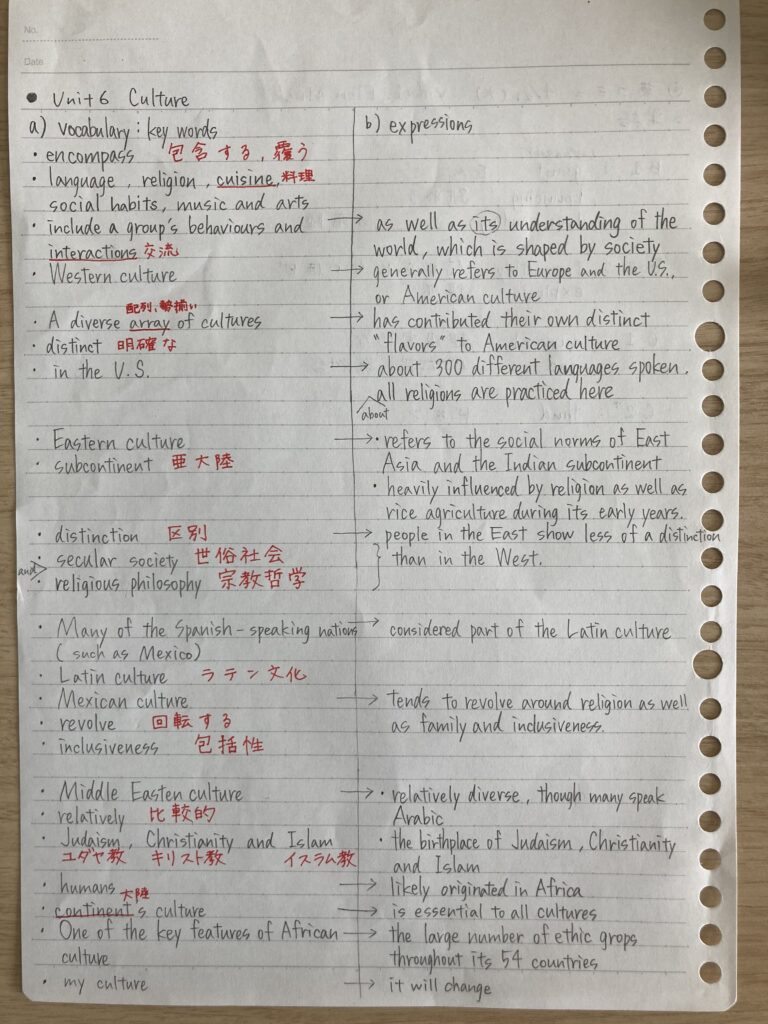
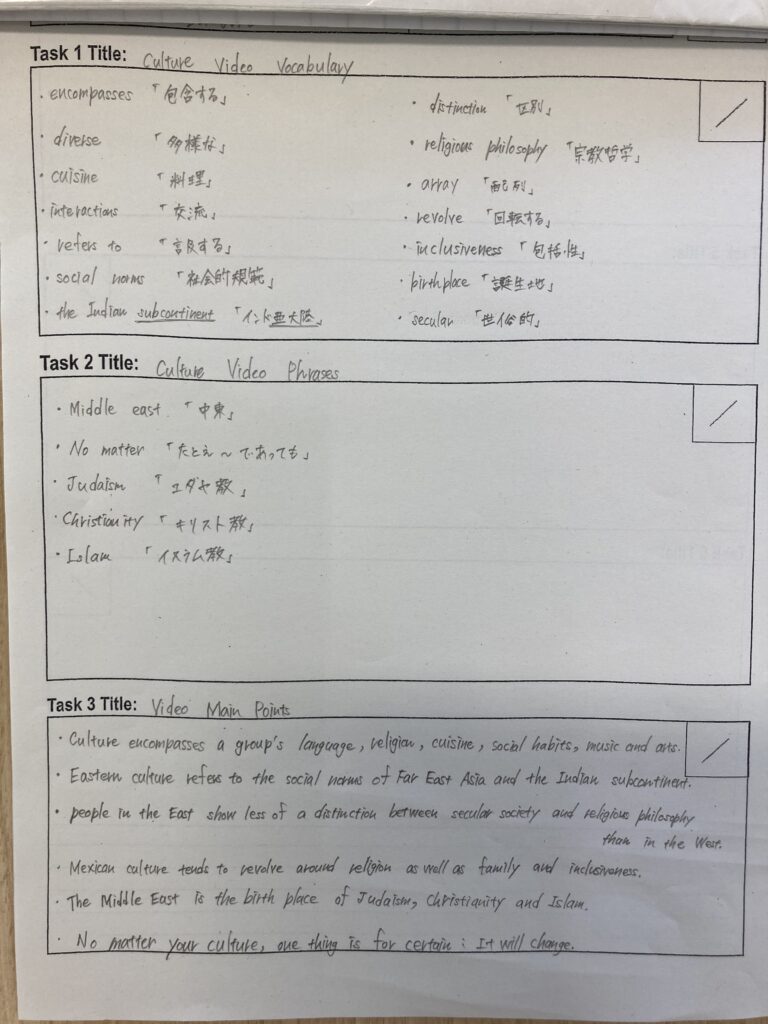
  • Video 6b. Culture: please watch and study; main points; english words; phrases – take notes on A4 paper/campus paper
  • Quiz 5

Aim: To learn about culture; there are 5 segments to todays video

Student Example:

Facts of Information (FOI)

  • Statistics is one method for using facts – internet search (research)
  • Graphs is also a good method for facts of information [next class]
  • Articles – newspaper / textbooks / journals

Task 5/6: Warm up activity: explain Japanese culture; and there are categories 1) Language, 2) religion, 3) cuisine (traditional food), 4) social habits, and 5) music and arts

hand huddle (circle in sports)

Task Activity: a) explain in your own words; b) research the internet

For example

  • a) In Australia the most common religion is Christianity and there are many churches around Australia. People go to church on Sunday and sing songs and payer.
  • b) Yes, Christianity remains the most popular religion in Australia – It is the most popular religion in Australia. With about 43.9% of the population identifying as Christian. <— quotation method, for example; “With about 43.9% of the population identifying as Christian.” URL: Google.com

Review Research Methods

  1. Re-write information (FOI) in your own words
  2. Copy&Paste a sentence and use “quotations” URL ====

Note: Reflection; what did you learn about FOI? what do you think? … please write a comment!

HOMEWORK: copy your notes to the worksheet; add more notes…

  • TASK 1 Title: Culture Video Vocabulary
  • TASK 2 Title: Culture Video Phrases
  • TASK 3 Title: Culture Video Main Points
  • Quiz 6

Student example:

Lesson 7/8/9 – June 3/10/17

JUNE 3

Aim: To learn about Culture and Traditions

Video link

Aim: To learn important points about the video; compare Mexico with Japan – Mexican culture and Japanese culture

Task 1. Point (a) / Point (b)

Task 2. Point (c) / Point (d)

Task 3. Point (e)

Student example:

Task 4. Mexican culture and Japanese culture (a)

  1. language: In Mexico they speak Spanish, and in Japan they speak Japanese
  2. religion:
  3. cuisine:
  4. social habits:
  5. music and arts:

Homework:

  • Task 4 finish
  • study points a / b / c / d / e
  • Quiz 5 –> Saturday 9am

June 10

Aim: To compare and learn about other cultures; important terms (words/definitions), for example;

  • Nation = country name; Japan, Mexico. Brazil…
  • Nationality = is your origin (place) of birth. I am Australian. You are Japanese.
  • Multi-cultural (al = all or many)(multi = many / more than 1): a country with more than one culture. Is Australia multi-cultural? Yes – there are many nationalities living in Australia (born in Australia) Is Japan multi-cultural? No, it isn’t.

Activity: Select one of the countries from the table we studied in Sogo class;

Table.

Task 5 Title: Think and write – no PC/smartphone (small writing)

  1. What is your impression about the country? その国について、どのような印象をお持ちですか?
  2. Do you want to go there for a (a) short vacation OR (b) long vacation ? (a)短期休暇でそこに行きたいですか、それとも(b)長期休暇でそこに行きたいですか?
  3. Tell me something interesting about the country? one or two things. その国について何か面白いことを教えてください。1つか2つで構いません。

Task Mixed Groups: please remember!

Procedure: Select 1 of the 5 country-criteria: language, religion, cuisine, social habits, music & arts

Task 4/5 photo upload

Task 6 Title: Reflection: What do you think about Culture? Is it important to learn about culture? Why or why not? 文化についてどう思いますか?文化について学ぶことは重要だと思いますか?その理由は何ですか?

Homework:

  • write 50-75 words about your country : criteria (A4 paper / Campus)
  • Saturday quiz]

JUNE 17

Warm Up

  • read your homework to your group members
  • select one person from your group to read to the class
  • upload end of class

Sentence activities – Project sentences

  • Example Sentence: Brazil employers give 30 days holiday, and employees take all 30 days. There are no days not used.

Method 1: to reverse the information (change the order)

  • Brazil employees (workers) take 30 days of their vacation, which is all of their vacation days.

Method 2: to give an evaluation of the result

  • Brazil has the highest number of vacation days (30), and they (workers) take all of their holidays

Method 3: to give your opinion (I think that… / I was surprised because …)

  • I think that/ I was surprised that/ 30 days vacation is a lot of holidays, and Brazil and France take all of their holidays.

Task 1 Title: Project sentences:

Activity: select a country from the Table (not Brazin or France) and write;

  • original sentence example
  • method 1 sentence
  • method 2 sentence
  • method 3 sentence

Task 2 Title: Using percent (%)

  1. Response 1: The percentage of responses is 58.6%
  2. Response 2: The …
  3. Response 3: The …
  4. Response 4: The …
  5. Response 5: The …

Project example: The percentage for responses 1-5 were 58.6% (1), xx% (2), xx%(3), xx%(4), and xx%(5).

Activity: we often use percent to give us a summary of results; its a simple and easy method to do; also it is easy to understand and think about results

Steps: please follow

  1. add the total – 220 responses
  2. to calculate the percent for each item (responses =5)
  3. calculate the percent for each response (item)

For example; response 1 is 129 out of total 220; what is the percent of 129 out of 220? = 58.6%; response 2 is 40 out of a total of 220 – 18.1%

Activity continue: Graphs

HOMEWORK

  • Video 7 (A4/Campus paper) – take notes of the vocabulary; phrases; main points ***study the video topic and language link
  • Saturday quiz
  • next class – worksheet and homework upload

Lesson 6/7 – May 27/June3

Aim: To learn about culture “Customs & Traditions”

Task 1 Title: What culture do you like in Japan?

  • answer (a) : make a list
  • explain one (b) : 25-30 words

Task 2 Title: What customs are difficult for foreigners?

  • side (a) make a list with your partner (3to5)
  • side (b) teach one custom to a foreigner (30-40words): select a different custom than your partner

Task 3 Title: Supporting visitors in Japan

  • make a list with your partner – how can we : help / teach / show / support foreigners in Japan (a)

HOMEWORK May 27

  • video 6 part A: listening and taking notes of the video (campus paper / A4)
  • part b: reading the text
  • next quiz – Saturday 9am

Task 4 Title: Diversity – what does the video say about diversity (60-70 words)

Task 5 Title: Telling an experience (story) [ Techniques 18 ]

Task 6: Class activity see June 10 lesson

HOMEWORK June 3

  • Finish Task 4 (watch the video again) and Task 5
  • quiz 5 (Saturday 9am –>

Lesson 7 – June 3

Aim: To learn and understand about culture “Customs and traditions link

May 27 HOMEWORK

  • Video: follow the steps on the video page; take notes and learn the language – A4 campus paper / note paper – Part 1 and Part 2 (not part 3)
  • Quiz 4

Task 1 Title: Key Words (a) / Expressions [short sentences] (b)

Task 2 Title: Main Points (c) / Support Sentences (d)

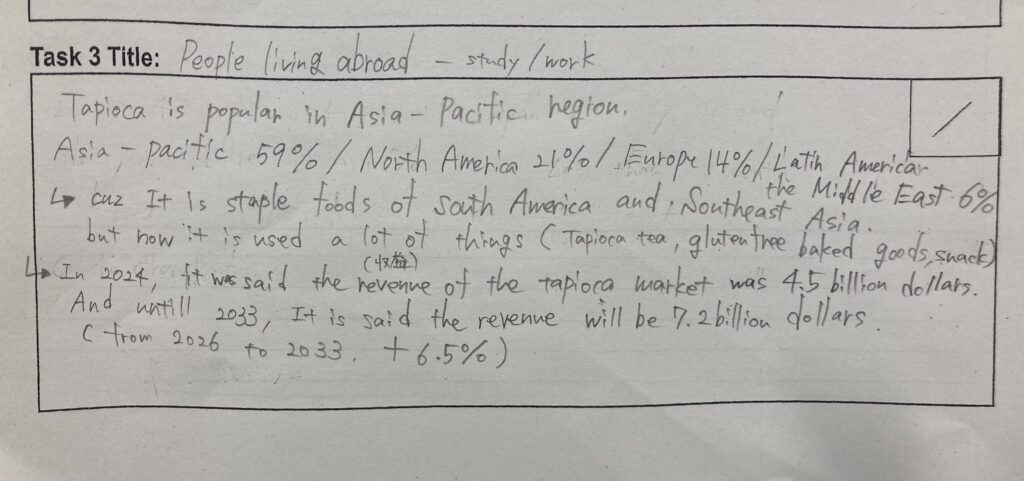
Task 3 Title: People living abroad – study / work [free writing]

  • find a statistic about this topic (anything) using Google search
  • write the sentence in English – 5 minutes
  • please read to your group members
  • Main Point = Facts of Information (FOI)
  • Support sentence – to give information about that fact.

Student example:

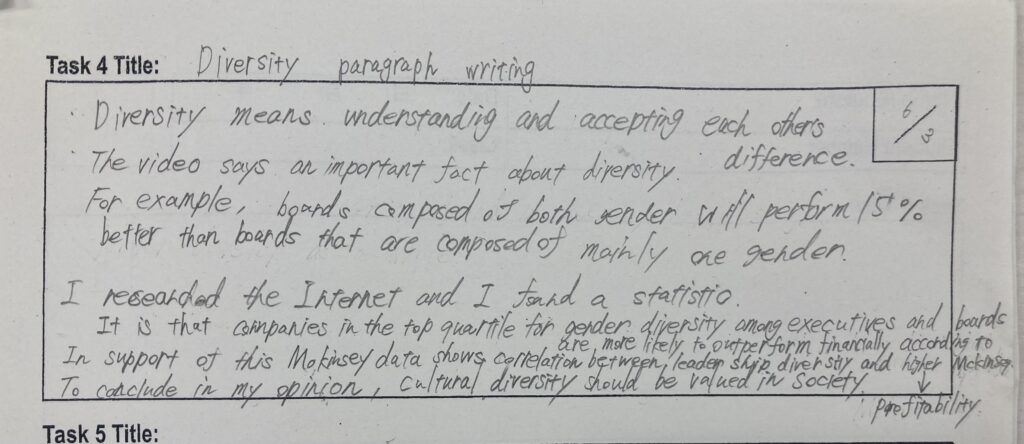
Task 4 Title: Diversity paragraph writing

  1. Diversity means (write a definition in your own words:
  2. The video says an important fact about diversity. For example,
  3. I researched the internet and I found a statistic. (fact of information). It is
  4. In support of this
  5. To conclude in my opinion,

HOMEWORK

  • Task 1, 2, and 4 – finish
  • Quiz 5 –> Saturday 9am

Student example:

HOT Topic: Multi-cultural Is an expression we say to describe the diversity of culture in a country. I want you to know that a lot of countries respect Japan for its rich and deep and meaningful customs and traditions. Also, I would like Japanese young people (adults) to have more foreigners as friends. So, please travel.

Lesson 6/7 – May 25/June 1

Aim: To learn about Culture “Customs & Traditions” and to use conversation techniques to discuss the topic.

lesson link

Task 1: Definition: What is culture?

  • (a) write your own definition of culture (30words)
  • (b) explain Japanese culture to a foreigner (25-35words)

HOMEWORK Study the video; take your own notes on A4 paper

Task 2: Questions about culture: technique 1 link

  • practice with your teacher

June 1 Aim: To share and discuss about culture and revise our notes

Steps: follow these steps;

  1. check your homework notes; read and highlight the main points, vocab, and phrases
  2. task 2: prepare and teach the subject; use information; opinion; example – about 1 minute; highlight the key text (eye contact); and record when teaching for your partner
  3. upload the task activities; check the Moodle instructions
  4. finish with a group and class discussion – how to teach a topic or subject?

HOMEWORK

  • Quiz 5
  • and take a rest (mini project – next class)

7. Living in the future

Aim: To learn about what it is going to be like living in the future, and to express your opinions about the future

Method: Follow these steps. The teacher will give you a worksheet in class.

HOMEWORK: watch and learn the video topic and language

Class Activity

Step 1: Task 1: What is the definition of living in the future? Use the video to help you. Write your own words (20-25 words). Also write 15-20 key words (in English).

Step 2: Task 2: Listen to the video to learn about the topic. Think about the main points, how many main points are there? Write them.

Video

Step 3: Task 3: What is Hybrid Learning? Write your own explanation (20-25 words)

Step 4: Task 4: The main point “Redesigning work spaces” is a new concept for work. Explain this idea: (50words)

Step 5: Task 5: At 1:30 – “Office Study” is talked about. Explain what this study was about. (35words).

Step 6: Task 6: What are the challenges for the future? Explain them. Can you think of one challenge yourself?

Lesson 5 – May 19

Aim: Unit Video 5: learn the language and understand the topic “Endangered Animals”

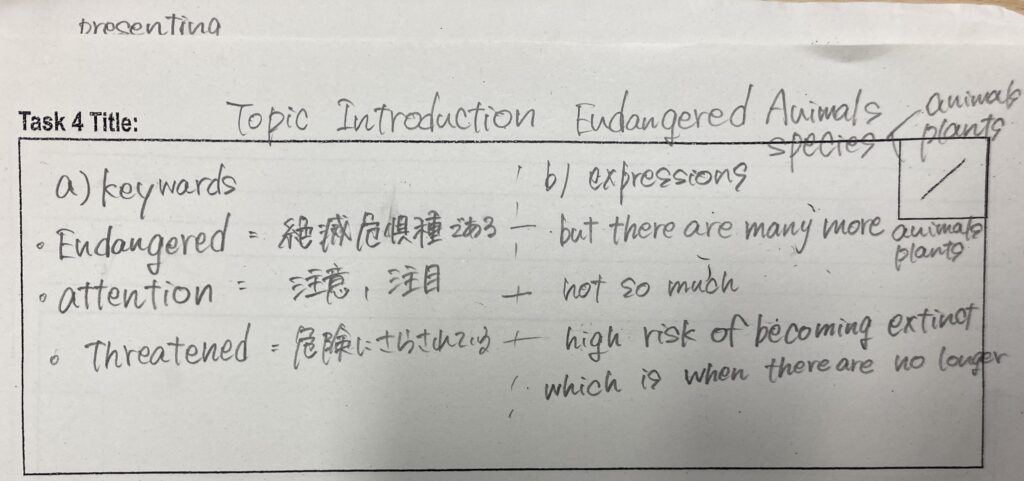
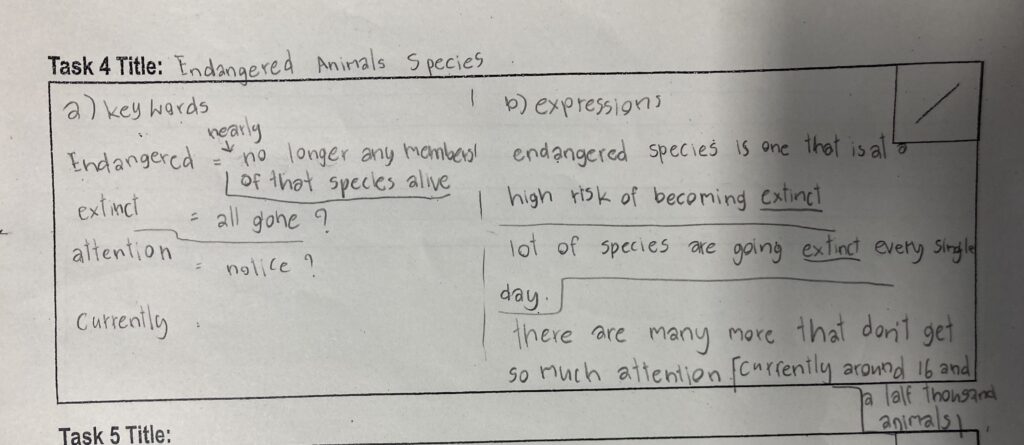
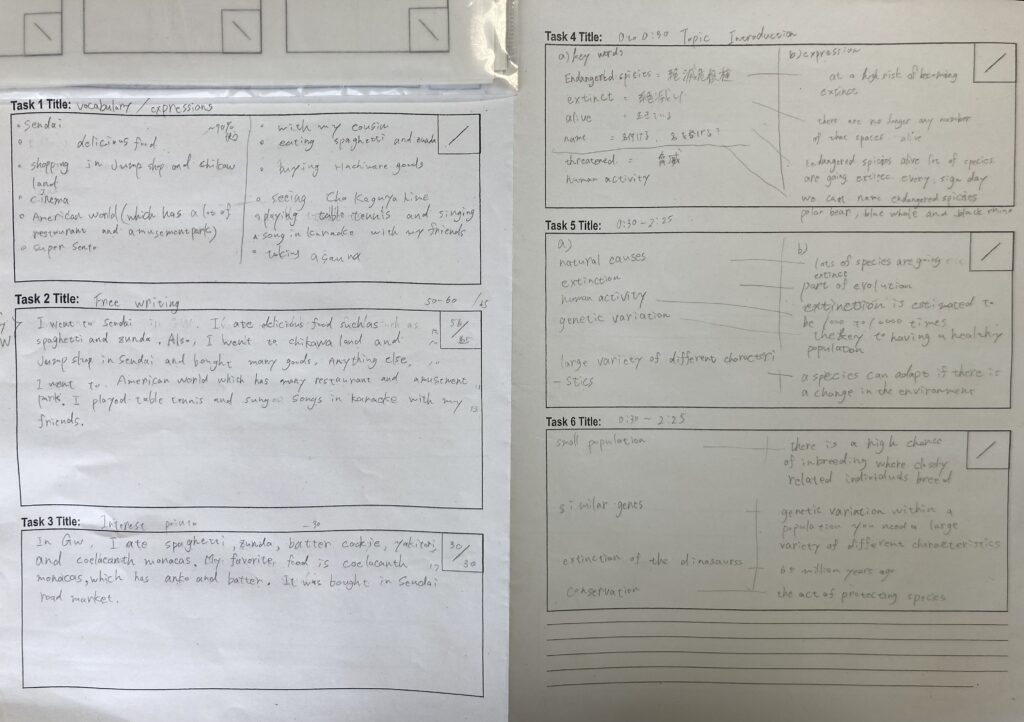
Task 4 Title: 0 to 0:30 Topic Introduction

  • divide your task into 2 halves
  • side a) key words [topic words]
  • side b) expressions: [short sentences] that explain the key words

side a) student example

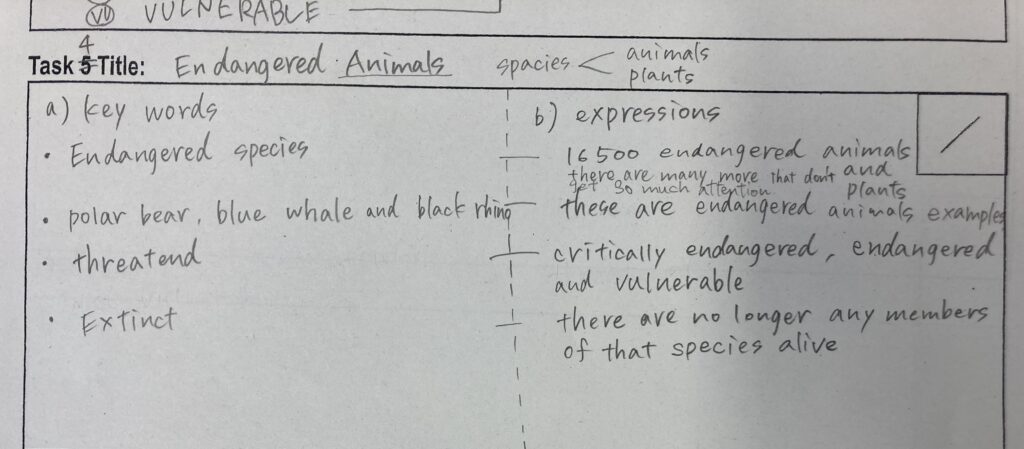
a) and b) student example

HOMEWORK

Task 4-5/6 Title: 0:30 – 2:25 Reasons and Problems [main points / 要点 (Yoten)– make a list of main points – a) vocab and b) expressions

Student Example: