Aim: To learn about Writing Formats
Method: APA will be sued as an example:
Procedure: Go to the Menu and read each of the links for 5-10 minutes; finally – read the complete ST Example paper
Aim: To learn about Writing Formats
Method: APA will be sued as an example:
Procedure: Go to the Menu and read each of the links for 5-10 minutes; finally – read the complete ST Example paper
Course aims and objectives:
Method: Paragraph writing and format
Support Sentences: are sentences that support your argument (ideas) in your writing, which are;
Paragraph structure: There are two ways to order your argument in paragraph writing:
Essay structure: It is also important to link your ideas between paragraphs to strengthen your argument (ideas). Ways of doing this include;
Lesson Aim: Select a topic based on the National subjects given by the education board of Japan.
Method: Select and research about the topic:
Paragraph Format: Follow this format in writing organization and ideas.
Essay Procedure:
After you have recorded the main points and taken notes that of ideas and opinions that you consider important. Follow these steps;
Consider their major themes, main characters and the messages of each article – it’s likely the theme will provide the overall meaning of the article. If, for instance, both articles have the same basic theme, you could identify the similar and difference ways the articles explore that theme. Or you could compare how the themes are different and how the article is written,
Once you’ve considered the themes and finished taking notes, make a list of things that are importantly similar and different from each other. You could make a list with columns for things the texts share and things they don’t. During this phase, the main points, ideas, and opinions can be major or minor.
Once you have have identified the general themes you need to begin recognizing the authors own research values and interests / and next identify article topic main points, ideas, and other points of view such as opinions – for example difference in research trends (prior research and current. Books written or contributed will give you an informative understanding on background history of research.
Scanning articles – identify a main idea that is directly expressed in the text. Start with methods, go to results and discussion. Then at a later time go to the theory (section 2).
The main idea is not always clearly stated. It is more difficult to identify a main idea when it is inferred or implied. It can be implied through other words in the paragraph. An implied main idea can be found in several ways.
Review:
(1) Reflective study: what have you learned in your subject area, and what do you need to learn in the future; and
(2) Reflection is an important skill to develop when you are a learner at school and to reflect on what is shaping your future;
To write a reflective essay you need to consider these experiences and plan and prepare for the future. Therefore your final essay will be to follow the following format:
Document format:
1 page essay; 1.5 line spacing; Reflective Title at the top (Line 1) centered; No space between paragraphs; Each paragraph is indented 5 spaces for the first line; Paragraph headings centered for each paragraph (no space between); font size 12; last line on the page by Last Name, First name(centered).
References on page 2; Reference heading centered
Appendix on page 3; information this Monday class. Online dictionary quote – “What is an appendix? A section at the end of a paper that includes information that is too detailed for the text of the paper itself and would “burden (complex) the reader” or be “distracting,” or “inappropriate” (APA, 2010, p. 38-9).”
Two rules; maximum word count (half a page); required – 1 to three appendix references using A1, A2, and A3.
HW for Early Learners
3. Opinion 1
Firstly I would like to make a statement of my opinion concerning whether or or not early learner’s need home work. The first statement goes against primary students requiring to do home work on a daily basis. [see Appenix A] Based on Article A and Article B I believe that home work should carefully be monitored and as well not given to students during holidays. I support students spending time with their family during official holiday seasons.
References
[A]
[B]
Appendix
A1.
At the time of my school life in primary school we were not given home work on a regular basis. Instead we had revision worksheets that we could decide to do when ever we wanted to.
A2
A3
Reflection is an important skill to develop when you are a learner at school. In this task. I would like you to reflect back from the beginning of your university course and reflect and think about how your mind has changed, the challenges you have had, and what you have learned – and how all of this has started to shape your future.
200 words
Aim: To develope important skills in argumentative and opinion writing
Method 1: Please use one Body Paragraph and opinion paragraph from your current essay. Research additional information online to support the text of information.
Why do we do this?
Procedure: Please see the before and after shots
Before:
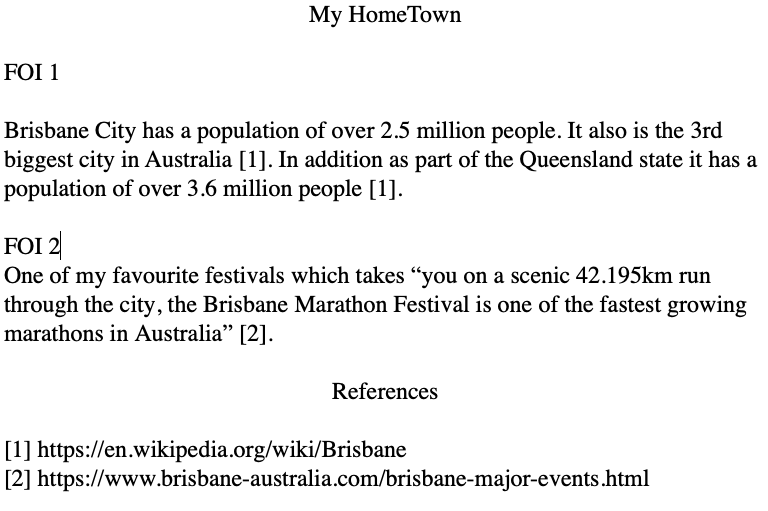
After:
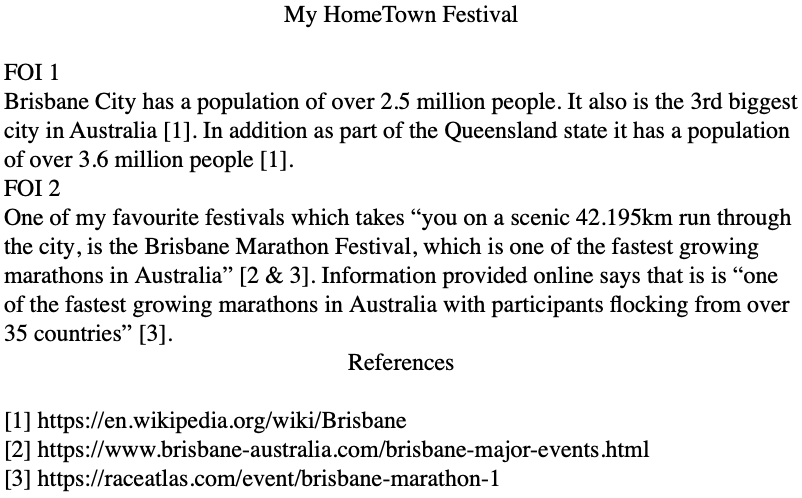
Method 2: Write a third paragraph expressing your opinion. In this paragraph follow the format;
Submit two documents:
What is argument or argumentative? We are going to examine two sources – information articles (2 articles) or 1 article and 1 web-based information page. Let’s start:
Oxford (2020) defines : 1 given to expressing divergent or opposite views: an argumentative child.
What is divergent?
Oxford (2020) defines : 1 …to be different or develop in different directions
What is opposite?
Oxford (2020) defines : having a position on the other or further side of something
1. The first step is to select two sources of information for this essay. Therefore:
2. Next complete the form: select
http://unistudy.net/stepup/wp-content/uploads/sites/2/2020/05/Article-Worksheet-IV.pdf
Introduction: Announce your subject; Introduce your 3 articles
Article1: Describe the article
Article 2: Describe the article
Article 3: Describe the article
Similiar paragraph – if the similiarities are not common then write a short explanation to why they are not.
Differences paragraph – why are there no differences if you cannot compare them.
Conclude: what conclusions can you make about these articles
After you have recorded the main points and taken notes that of ideas and opinions that you consider important. Follow these steps;
Consider their major themes, main characters and the messages of each article – it’s likely the theme will provide the overall meaning of the article. If, for instance, both articles have the same basic theme, you could identify the similar and difference ways the articles explore that theme. Or you could compare how the themes are different and how the article is written,
Once you’ve considered the themes and finished taking notes, make a list of things that are importantly similar and different from each other. You could make a list with columns for things the texts share and things they don’t. During this phase, the main points, ideas, and opinions can be major or minor.